
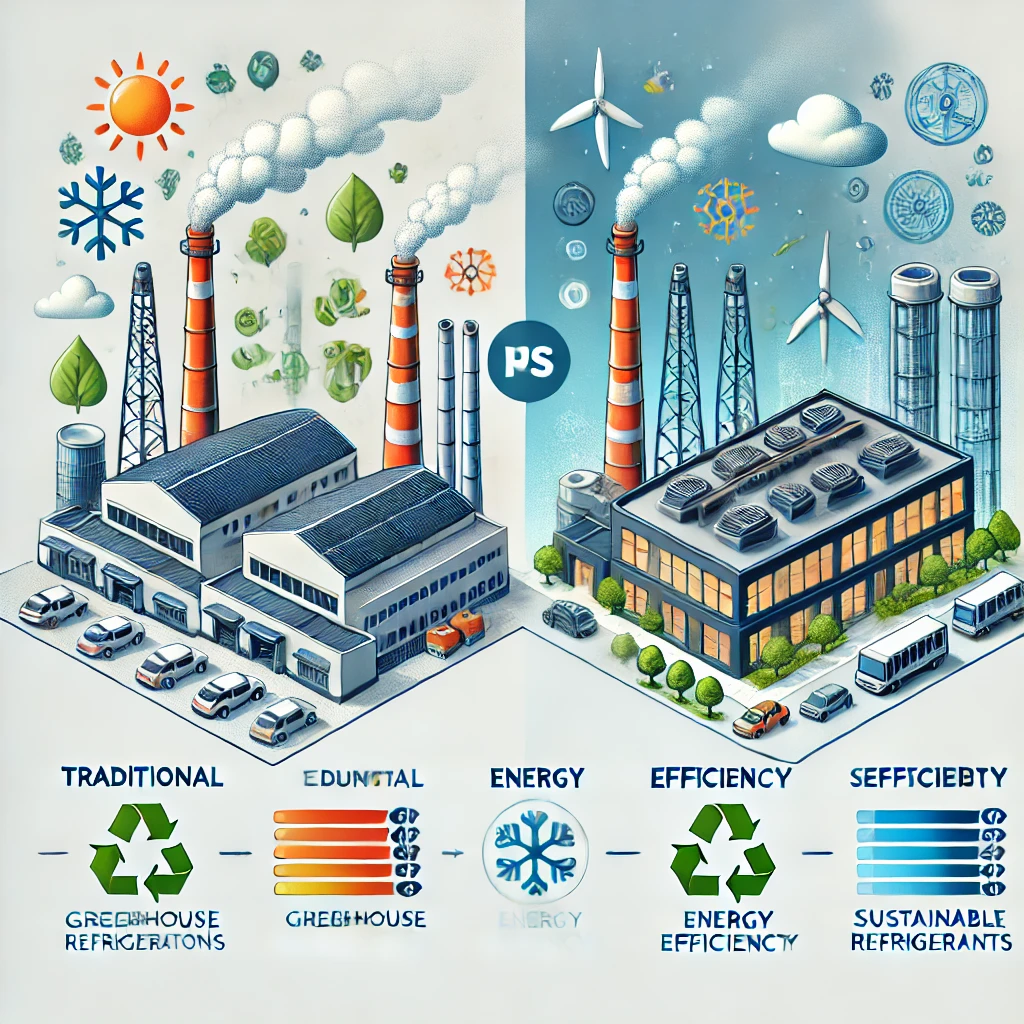
For decades, traditional refrigerants such as CFCs (Chlorofluorocarbons), HCFCs (Hydrochlorofluorocarbons), and HFCs (Hydrofluorocarbons) have dominated the cooling industry. However, as awareness of their detrimental impact on the ozone layer and climate change grows, there has been a significant push toward eco-friendly alternatives.
In this blog, we take a deep dive into the differences between conventional and modern refrigerants, comparing their environmental impact, efficiency levels, and cost-effectiveness. While older refrigerants were known for their effectiveness, they contributed heavily to ozone depletion and high carbon emissions. The transition to natural refrigerants (CO₂, ammonia, hydrocarbons) and hydrofluoroolefins (HFOs) is revolutionizing the industry by offering sustainable, energy-efficient cooling solutions.
We will also cover key industry regulations that are driving this change, such as the phase-out of HFCs under the Kigali Amendment and the financial incentives available for businesses that adopt greener refrigerants. By the end of this blog, readers will have a clear understanding of why switching to eco-friendly refrigerants is not just a regulatory requirement but also a smart business decision for long-term cost savings and sustainability.
This article is a must-read for businesses, homeowners, and HVAC professionals looking to make informed decisions about the future of cooling technology.